
Polling
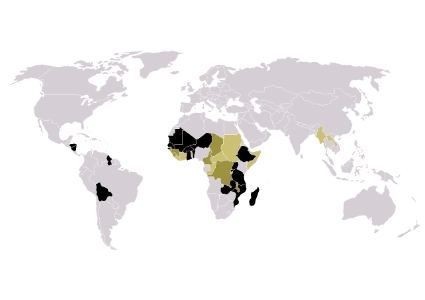
Heavily indebted poor countries
More than 2 billion people inhabit the 39 developing countries that are heavily indebted to other nations. These heavily indebted poor countries (HIPC) pay about $3 billion each year to service their debt, some of which was acquired during the Cold War by corrupt regimes. These debt payments greatly reduce the availability of funding for urgent human services needed by the citizens of these countries. Beginning in 1996, industrialized donor countries began cancelling some of this debt through programs such as the HIPC Initiative. To qualify, countries must be facing an unsustainable debt burden which cannot be managed with traditional means. About 36 of the 39 HIPC nations are in this program. However, this assistance is conditional on the governments of these countries meeting a range of economic management and performance targets.
Critics claim these conditions often undermine poverty-reduction efforts by imposing significant financial burdens on their populations. For example, privatizing utilities tend to raise the cost of services beyond the ability of many citizens to pay. Critics claim the HIPC Initiative is a program designed by creditors to protect creditor interests, leaving countries with unsustainable debt burdens even after intervention. They say the International Monetary Fund and the International Bank for Reconstruction and Development (World Bank) have sufficient resources to easily cancel the debts owed to these institutions by heavily indebted poor countries. Several years ago there was some progress made in relieving the debt of poor countries, but the (HIPC) Initiative is still relevant and further actions on debt sustainability are still needed.
Pending Legislation: S.3509 - A bill to provide for debt reduction for developing countries for purposes of developing resilience, and for other purposes
Sponsor: Sen. Peter Welch (VT)
Status: Senate Committee on Foreign Relations
Chair: Sen. Jim Risch (ID)
Critics claim these conditions often undermine poverty-reduction efforts by imposing significant financial burdens on their populations. For example, privatizing utilities tend to raise the cost of services beyond the ability of many citizens to pay. Critics claim the HIPC Initiative is a program designed by creditors to protect creditor interests, leaving countries with unsustainable debt burdens even after intervention. They say the International Monetary Fund and the International Bank for Reconstruction and Development (World Bank) have sufficient resources to easily cancel the debts owed to these institutions by heavily indebted poor countries. Several years ago there was some progress made in relieving the debt of poor countries, but the (HIPC) Initiative is still relevant and further actions on debt sustainability are still needed.
Pending Legislation: S.3509 - A bill to provide for debt reduction for developing countries for purposes of developing resilience, and for other purposes
Sponsor: Sen. Peter Welch (VT)
Status: Senate Committee on Foreign Relations
Chair: Sen. Jim Risch (ID)
Suggestion
Poll Opening Date
December 29, 2025
Poll Closing Date
January 4, 2026